
Goldbridge Insurance Services
Pump trucks, pollution exposure, units in the field, and customers who want a certificate by tomorrow morning. We build sanitation programs around how you actually work, and we place them with carriers that write this class.
Most carriers see a portable toilet or septic company and stop at three words: waste, trucks, liability. That’s why so many owners end up with one expensive auto policy, a general liability policy that quietly excludes the thing they do all day, and no one checking how the pieces fit.
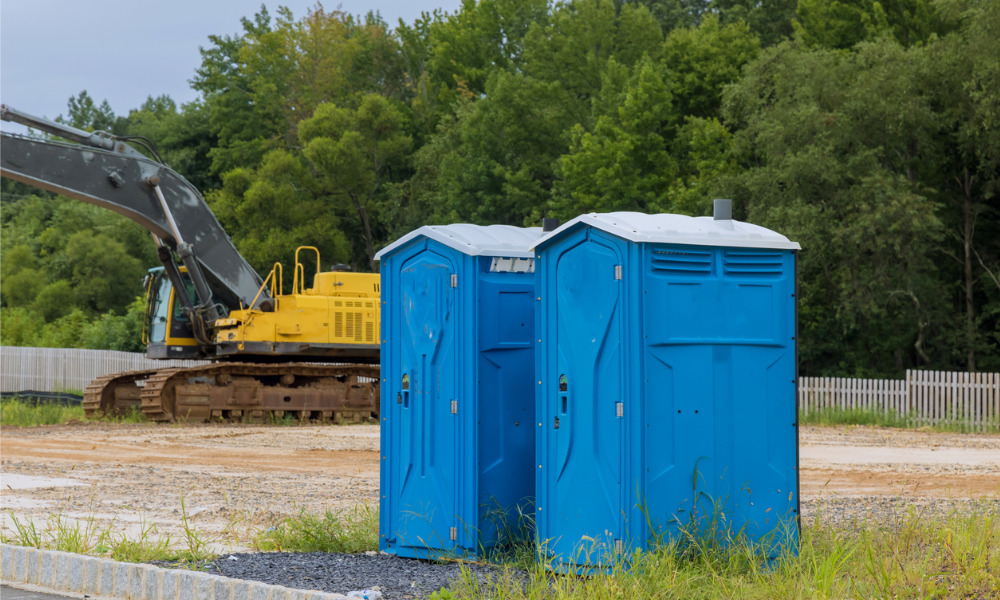
Your business isn’t like a landscaper or a janitorial company. You run heavy vacuum trucks on public roads every day. You haul sewage. Your equipment sits unattended on job sites and event grounds for weeks. And your customers, from general contractors to event producers, write insurance requirements into every contract.
We write this class on purpose. We know which carriers want it, what underwriters ask for, and where the gaps usually hide.
This is the gap we find most often. Standard general liability policies include a pollution exclusion. For most businesses that’s a footnote. For a company that pumps and hauls waste, it can wipe out coverage for your most likely claim.
Think about what can actually go wrong:
Cleanup costs, third-party property damage, and government-ordered remediation can run well past what a small operator can pay out of pocket. A contractors pollution liability policy, or pollution coverage added to your program, is built for exactly this. We’ll show you what your current policy excludes and quote the coverage that fills the gap.
Don’t forget the truck. Commercial auto policies commonly exclude pollution from the cargo being hauled. If your truck overturns and the tank ruptures, the crash may be covered and the cleanup may not. We look at whether your auto carries a broadened pollution endorsement, or whether your pollution policy covers waste in transit.
Occurrence vs. claims-made. Some pollution policies only pay if the claim is reported while the policy is active. We’ll explain which form you have and what happens if you switch carriers.
When waste leaves your truck, three policies look at the claim and two of them usually decline. Knowing which endorsement closes the gap is the difference between a covered loss and a lawyer.
On the general liability side, the pollution exclusion is broad and it does not care whether the release was sudden or gradual. Septage, effluent, grease and the chemical additives in your units are all pollutants under the form. Carriers address this either with a narrow pollution buyback endorsement or, far better, with a standalone contractors pollution liability policy written for the exposure rather than carved back into an exclusion.
On the auto side, the business auto form excludes bodily injury and property damage arising out of the discharge of pollutants that are being transported by the covered auto. That sentence describes your business. The fix is an endorsement, and there are two to look for:
Search your commercial auto declarations page for CA 99 48 (Pollution Liability — Broadened Coverage for Covered Autos) or CA 31 10, the motor carrier equivalent. If neither one appears, the waste in your tank is not insured while it is moving.
Driver qualification is the other half of this. Under the federal definition, a tank vehicle is a commercial motor vehicle carrying liquid in a tank with an individual rated capacity above 119 gallons and an aggregate rated capacity of 1,000 gallons or more. Cross that line and the driver needs the tank endorsement on the CDL, which narrows your hiring pool and changes how an underwriter prices the fleet. A service van and a 2,500-gallon pump truck are not the same risk to anyone.
County rules sit on top of all of it. Most California counties require a liquid waste hauler permit with manifest and disposal-site documentation, and underwriters increasingly want to see that your permits and manifests are current before they quote. We go through the exclusion language line by line in our breakdown of pollution liability for portable toilet and septic companies.
Your customers won’t let a unit onto the site without a certificate. General contractors, property managers, event producers and cities usually ask for:
If your agent takes three days to send one, you lose the job or deliver without it. We set your policies up with the endorsements your contracts actually require, so most certificates go out the same business day. Send us the contract’s insurance section and we’ll tell you whether your current coverage meets it.
For most sanitation companies, commercial auto is the biggest premium and the most heavily underwritten part of the program. Vacuum trucks are heavy, on the road all day, and carrying a load underwriters don’t love.
We help you get it right:
If your auto has been placed with a pricey carrier because nobody else would look at it, that’s usually where we can make the biggest difference.
General liability covers bodily injury and property damage from your operations: a guest slipping near a unit you placed, a truck backing into a gate while servicing a site. We make sure your GL is written for sanitation operations, not a generic service class, so claims aren’t challenged later over how your business was described.
Your restrooms, hand-wash stations, restroom trailers and holding tanks spend most of their lives off your property. They get stolen, burned, vandalized and knocked over. Many business property policies give little or no coverage to equipment sitting on someone else’s site.
Inland marine (equipment) coverage follows your units wherever they are. We’ll schedule your inventory, from standard units to ADA and luxury trailers, so a bad weekend doesn’t mean replacing units out of pocket.
Workers’ comp is required in California as soon as you have employees, and sanitation work comes with real injury exposure: lifting, hose handling, driving, and slips on job sites. We make sure your drivers and service techs are classified correctly and your payroll is split accurately. We also review your loss history so your rate improves over time instead of creeping up.
Workers’ compensation premium on a sanitation account comes down to which classification your payroll lands in. The spread between the codes that touch this industry is wide, and a wrong assignment is expensive in both directions.
Here are California’s advisory pure premium rates for those codes, effective September 1, 2026:
| Code | Classification | 9/1/2026 | 9/1/2025 | 9/1/2024 | Two-year change |
|---|---|---|---|---|---|
| 9426 | Septic or Portable Toilet Services | $6.826 | $5.790 | $5.450 | +25% |
| 9402 | Sewer, Tank or Hazardous Spill Cleaning | $4.123 | $3.830 | $3.390 | +22% |
| 9403(1) | Garbage or Refuse Collecting | $7.555 | $7.020 | $6.180 | +22% |
Those are advisory rates per $100 of payroll, not what a carrier charges. Your actual cost is the insurer’s own filed rate adjusted by your experience modification. But the direction matters: 9426 moved up almost 18 percent in a single year, so a renewal that looks like a rate increase may simply be the classification repricing underneath you.
The classification rules have edges that catch owners every year:
If you run more than one of these operations, the division of payroll has to be supported by records an auditor will accept, which usually means time records rather than estimates. That is exactly what our payroll and audit review is for, and on a multi-operation account it is normally where the money is.
Large GCs, municipalities and event venues often require $2 million to $5 million in total limits. An umbrella sits on top of your auto, GL and employer’s liability, so you can meet those contracts without buying high limits on every policy.
| Coverage | What it covers | Required? | Common gap we find |
|---|---|---|---|
| Commercial auto liability | Injury and damage you cause while driving | Yes, by law | Limits below contract requirements; wrong vehicle class |
| Auto physical damage | Damage to your own trucks | Usually by your lender | Dropped on older trucks that are still expensive to replace |
| General liability | Injury and property damage from your operations | Required by most contracts | Written under a generic service class |
| Pollution liability | Spills, leaks, cleanup and remediation | Increasingly required by contracts | Not purchased at all |
| Inland marine | Units and equipment anywhere they sit | No | Units only covered at the yard, or not scheduled |
| Workers’ comp | Employee injuries | Yes, with any employees | Misclassified drivers and techs |
| Umbrella | Extra limits over auto, GL and employer’s liability | Often by larger contracts | Doesn’t sit over every underlying policy |
| Property / business income | Yard, shop, tools, lost income | No, unless leased or financed | Missing business income |
| EPLI | Employment lawsuits | No | Not purchased |
Illustrative example based on the kinds of accounts we see. Not an actual client.
Picture a Southern California operator with 12 trucks (a mix of vacuum and service trucks), about 900 units including ADA units and a few restroom trailers, and 20 employees. They work construction sites and weekend events in three counties.
A program for a company like that usually needs:
The work that moves the price is usually in the submission: a clean driver list with MVRs, an accurate radius, revenue split by service line, and a written spill procedure. That’s what gets more carriers to quote.
These are typical examples, not specific client claims. They show why the policies have to be set up to work together.
| What happens | Policy that should respond | Where owners get caught |
|---|---|---|
| A hose splits while pumping units at a construction site, and waste runs into a storm drain | Pollution liability | The GL pollution exclusion; no pollution policy in place |
| Your vacuum truck rear-ends a car at a light | Commercial auto liability | Low limits that don’t meet the contract or cover a serious injury |
| The same truck is damaged in the accident | Auto physical damage | No collision coverage on an older truck that still costs a lot to replace |
| A valve fails in transit and the load spills on the freeway | Auto liability plus pollution | Auto policies often exclude pollution from the load you’re hauling unless an endorsement adds it back |
| 20 units are burned by vandals at an event site | Inland marine (equipment) | Property policy only covers equipment at your yard |
| A festival guest trips on a unit’s step and breaks a wrist | General liability | GL written under the wrong class, so the carrier questions coverage |
| A tech strains his back lifting a holding tank | Workers’ comp | Employee misclassified, leading to a premium audit bill |
| A GC is sued over an injury near your unit and tenders it to you | GL with additional insured endorsement | AI endorsement missing, or doesn’t match the contract wording |
Your price is set long before anyone quotes it, by how your business is described to the underwriter. Here’s what carriers weigh on a sanitation account, and how we present each piece.
| Factor | What the underwriter wants to know | How we present it |
|---|---|---|
| Trucks | Year, make, GVW, tank size (gallons), vacuum vs. service truck | A clean vehicle schedule with values and use for each unit |
| Drivers | Ages, years of experience, CDL status, MVRs | Driver list and MVRs up front, with a written hiring standard |
| Radius | Local, intermediate or long haul; how far from the yard you run | Your real service area, not a guess that overstates it |
| Operations | Portable units, septic pumping, grease, events, construction | Revenue split by service line, so you’re rated for what you do |
| Units | Number of standard, ADA, hand-wash and trailer units, and total value | A unit inventory with replacement values |
| Disposal | Where waste is dumped and how it’s handled | Disposal sites and your spill procedure |
| Loss history | Claims over the last 3 to 5 years | Loss runs, plus a short note explaining any claim and what changed |
| Experience | Years in business and the owner’s industry background | Owner bio, especially for new ventures |
Most declines and bad quotes trace back to one of these being missing or described wrong. Fix the submission and the market often opens up.
We’ll make sure your policies line up with your permits, so a lapse or a missing filing doesn’t park your trucks.
We work with one-truck startups and established fleets across California.
New company with no history? We’ll walk you through it.
Often not. Most GL policies include a pollution exclusion, which can remove coverage for spills, leaks and cleanup. Pollution liability coverage is designed to fill that gap. We’ll review your policy and show you exactly what’s excluded.
Most need commercial auto for service and pump trucks, general liability, pollution liability, inland marine coverage for units in the field, and workers’ comp once they have employees. Many also carry an umbrella to meet contract requirements.
It depends mostly on your trucks, drivers, number of units, payroll and loss history. Commercial auto is usually the largest piece. The fastest way to get a real number is a short review of your vehicles and current policies.
Not always. Business property policies often limit coverage for equipment away from your yard. Inland marine coverage is built to protect units wherever they’re placed.
Yes. New operators can be placed, although options are narrower and underwriters look closely at driver experience and truck details. We help new companies put together a clean submission from day one.
Yes. We set those endorsements up on your policies and issue certificates, usually the same business day.
Often, yes. Sanitation risks get declined for fixable reasons like vehicle classification, radius or incomplete driver information. We’ll figure out what went wrong and take the account to carriers that write this class.
Not automatically. Auto policies often exclude pollution from the load you’re hauling. We check whether your auto or pollution policy covers waste in transit.
Not always, since it depends on the truck’s weight. Carriers still want experienced drivers with clean MVRs, and drivers under 25 or with recent violations can limit your options.
Some smaller operators can combine GL and property in a business owner’s policy (BOP). Auto, workers’ comp and pollution are almost always separate. What matters is that they’re coordinated.
Start with what your contracts require. Many GCs and venues ask for $1 million per occurrence on GL and auto, plus a $1 million to $5 million umbrella. We’ll match your limits to the jobs you want to win.
Yes. The exposures overlap heavily with septic and portable toilet work, so we build those programs the same way.
It can if payroll or revenue was estimated low or put in the wrong class. We set realistic estimates up front and review them mid-year, so the audit doesn’t come with a big bill.
Yes. We can place operations in other states and multi-state fleets.
Related reading: Why portable toilet companies need more than just workers’ comp insurance.
A sanitation program is built from several forms, and each one is worth understanding on its own: commercial auto for the pump and service trucks, general liability for the work itself, workers’ compensation for your crews, inland marine for units and equipment sitting at customer sites, commercial property for the yard and shop, commercial umbrella for the limits your contracts demand, employment practices liability for the claims California employers actually face, and cyber liability for the dispatch and billing systems the whole operation runs on. Our business insurance overview shows how the pieces fit together.
Send us your current declarations pages and a list of your trucks. Within a few business days we’ll show you:
No obligation. If your program is already set up right, we’ll say so.
Or start here. Tell us what you carry now and we will reply the same business day with exactly what we need.