
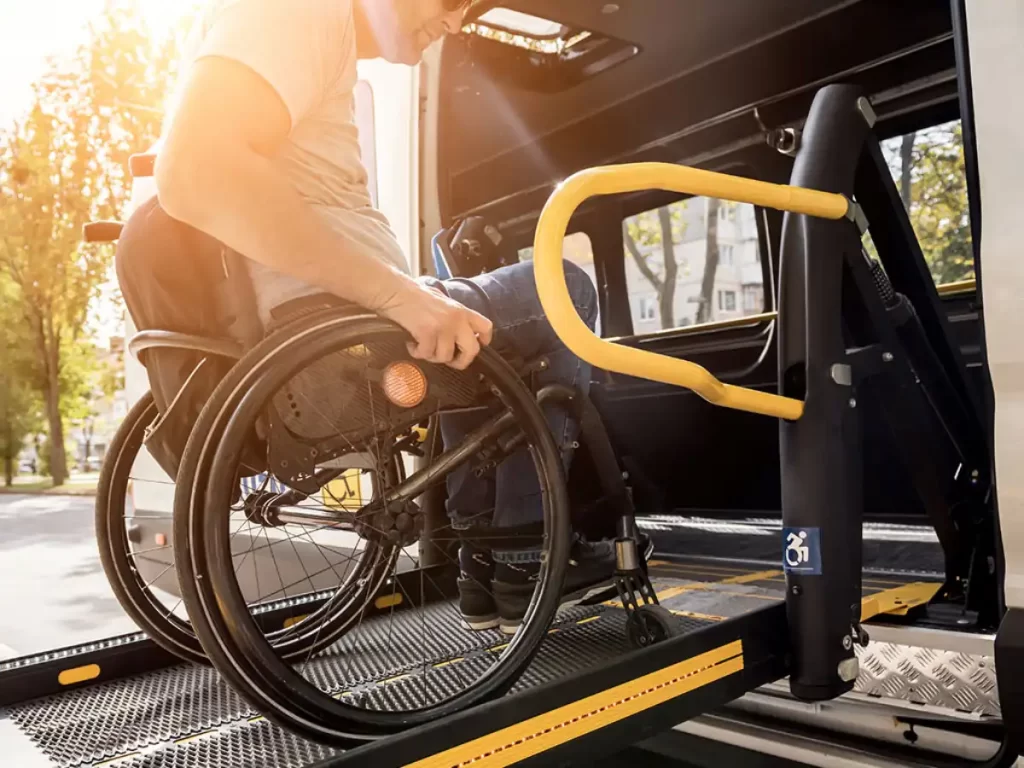
Non-emergency medical transportation companies provide an essential service. They help seniors, patients with disabilities, dialysis patients, rehabilitation patients, and others get safely to medical appointments when they cannot rely on ordinary transportation.
The work may look straightforward from the outside, but NEMT companies face a combination of risks that many standard transportation businesses do not. You are not only operating vehicles. You are transporting passengers who may have mobility limitations, medical conditions, or require assistance entering and exiting the vehicle.
That makes it especially important to build an insurance program around the actual operation—not simply buy the cheapest commercial auto policy available.
Commercial Auto Is the Foundation
For most NEMT companies, commercial auto is the largest and most important part of the insurance program.
Vehicles are constantly on the road, often making multiple pickups and drop-offs each day. Drivers may travel through congested areas, apartment complexes, hospitals, medical offices, rehabilitation centers, and dialysis facilities.
A serious accident can involve:
- Injuries to passengers
- Injuries to other drivers or pedestrians
- Damage to multiple vehicles
- Claims involving wheelchair lifts or loading equipment
- Allegations that a passenger was not properly secured
- Lost income while a vehicle is being repaired
NEMT owners should make sure every vehicle is properly scheduled, every driver is disclosed, and the actual radius and use of each vehicle are accurately reported to the carrier.
Trying to save money by leaving out drivers, vehicles, or mileage can create serious problems when a claim occurs.
Passenger Assistance Creates Additional Liability
NEMT drivers often do more than drive.
They may help passengers walk to the vehicle, assist with wheelchairs, operate hydraulic lifts, secure mobility devices, or help passengers enter medical facilities.
That creates liability beyond an ordinary auto accident.
For example, a passenger may claim that:
- A wheelchair was not properly secured
- A lift malfunctioned
- The driver failed to provide adequate assistance
- The passenger fell while entering or exiting the vehicle
- The driver left the passenger unattended
- The company failed to follow special transportation instructions
These situations can involve commercial auto, general liability, or professional liability depending on how the claim occurred and how the policies are written.
Workers’ Compensation Claims Can Be Expensive
NEMT drivers regularly assist passengers with limited mobility. Even when employees are trained properly, lifting and transfer-related injuries can happen.
Common workers’ compensation claims include:
- Back and shoulder strains
- Knee injuries
- Slips and falls
- Injuries while operating wheelchair lifts
- Vehicle accidents
- Repetitive-motion injuries
- Injuries caused by difficult or unstable passengers
A strong safety program should include training on wheelchair securement, passenger assistance, proper lifting techniques, accident reporting, and vehicle inspections.
Insurance carriers also pay close attention to the company’s hiring practices, driver history, training records, and prior losses.
Driver Screening Matters
One poor driver can create years of insurance problems.
NEMT companies should have documented procedures for reviewing:
- Motor vehicle records
- Driver’s-license status
- Prior accidents and violations
- Driving experience
- Background checks
- Drug and alcohol policies
- Training completion
- Ongoing driver performance
Carriers may decline an account or increase pricing when drivers have serious violations, suspended licenses, frequent accidents, or limited commercial driving experience.
Regularly reviewing motor vehicle records—not only at the time of hire—can help identify problems before they result in a major claim.
Wheelchair Vans and Specialized Equipment Must Be Disclosed
A wheelchair-accessible van is not always viewed the same way as a standard passenger vehicle.
Carriers may need information about:
- Wheelchair capacity
- Lift or ramp type
- Securement systems
- Vehicle modifications
- Maintenance schedules
- Passenger capacity
- Whether stretchers are transported
- Whether passengers remain in wheelchairs during transport
The policy should accurately reflect how the vehicles are used. Specialized equipment should also be reviewed to determine whether it is covered under the auto policy or requires separate equipment coverage.
General Liability Still Matters
Commercial auto handles many transportation-related claims, but it does not cover every situation.
General liability may respond to incidents that occur away from the operation of the vehicle, including certain claims involving office premises, customer interactions, or business operations.
NEMT companies should also review whether they need:
- Professional liability
- Abuse and molestation coverage
- Employment practices liability
- Cyber liability
- Crime coverage
- Umbrella or excess liability
- Hired and non-owned auto coverage
The right combination depends on the company’s contracts, passengers, employees, vehicles, and scope of services.
Contracts Can Create Insurance Requirements
NEMT companies often contract with healthcare organizations, transportation brokers, facilities, government programs, or private organizations.
These contracts may require:
- Specific auto liability limits
- General liability coverage
- Workers’ compensation
- Additional insured status
- Waivers of subrogation
- Primary and noncontributory wording
- Umbrella limits
- Notice of cancellation
- Specific certificate wording
Before signing a contract, the insurance requirements should be reviewed carefully. Some companies agree to limits or endorsements that their current carrier cannot provide.
It is much easier to address those issues before the contract is signed than after service has already started.
Claims Should Be Reported Immediately
NEMT companies should report accidents and passenger incidents as soon as possible.
Even when a passenger says they are fine, injuries can be reported later. Drivers should document:
- The date, time, and location
- Passenger information
- Witness information
- Photos of the vehicle and scene
- Police-report information
- Statements made by the passenger
- Whether the wheelchair or mobility device was secured
- Whether emergency medical assistance was offered
Dash cameras and interior cameras can also be valuable, provided they are used in compliance with applicable privacy and recording laws.
The Cheapest Policy Can Become the Most Expensive
Insurance for NEMT companies can be expensive, especially when the business is new or has prior claims.
That sometimes leads owners to focus only on the monthly payment.
But a low-priced policy is not helpful if it excludes an important exposure, does not cover the actual vehicle use, or has limits below what your contracts require.
The goal should be to find a competitive program that accurately reflects the operation and protects the company when something goes wrong.
Final Thoughts
Non-emergency medical transportation is a specialized industry with risks involving vehicles, employees, vulnerable passengers, wheelchair equipment, contracts, and medical facilities.
A strong insurance program should be reviewed regularly as the company adds drivers, vehicles, service areas, and new contracts.
Goldbridge Insurance Services works with transportation businesses to review commercial auto, workers’ compensation, general liability, umbrella, and other coverage needs.
Need a second opinion on your NEMT insurance program? Contact Goldbridge Insurance Services for a review of your current policies, loss history, driver schedule, vehicle schedule, and contract requirements.
Call (888) 590-2667 or email info@goldbridgeins.com.
Goldbridge Insurance Services · 15840 Ventura Blvd, Suite 203, Encino, CA 91436
